With strong economic conditions in Denmark, more people are in work than ever before, but there are still a substantial number of people who remain disconnected from education and employment. This exclusion weakens social cohesion and prevents individuals from accessing opportunities that could improve their wellbeing and long term prospects.
Education leads to improved employment opportunities, but the Danish system for now has been too inflexible and non-inclusive to follow the development of the youth generations.
The employment system and local public services have been characterised by bureaucracy, a lack of meaningful support, and insufficient coordination between actors, why the new employment reform has i.e. removed the criteria for a job center and citizens’ needs now outweigh procedural requirements.

Why this programme?
The programme is grounded in our belief in the fundamental value of communities and the ambition to create pathways into inclusive and uplifting communities for those who feel excluded. It builds on the heritage of Grundfos as an inclusive workplace dating back to 1968, when the company pioneered flex workshops to create equal employment opportunities for marginalised people.
In recent decades, there has been significant momentum in Denmark to include vulnerable groups in active communities, but participation in sports in Denmark is unequal, with vulnerable groups significantly underrepresented due to socio‑economic, cultural and geographic barriers.

While community‑based sports have demonstrated strong potential to improve well‑being, inclusion, education and employment outcomes, the field of inclusive sports is fragmented, underfunded and structurally marginalised across policy areas.
“Many actors operate without long‑term financial security, coordinated infrastructure or a shared platform, and sports‑based inclusion is often treated as a voluntary add‑on rather than a core social intervention.“
Without a more holistic, systemic and sustained approach that connects civil society, municipalities and national policy frameworks, the full potential of sports as an arena for social inclusion and equal life opportunities remains unrealised.
The Foundation’s Community Engagement Grants support employees of Grundfos and Grundfos companies who work with local NGOs, institutions, authorities, and philanthropic initiatives that address critical challenges in their communities. From 2023 onwards, the Foundation only supports Community Engagement Projects making active use of Grundfos’ Volunteering Policy.

The Community Engagement Grants live into Grundfos’ tradition for reaching out in the local community and acting as a good neighbour by providing financial support to local projects. The Foundation has a strong wish to see more employee involvement in the projects through active use of the Volunteering Policy.
“Funding for local community engagement projects within water, climate, or people, is dependent on local Grundfos employees contributing with volunteering.“
Kim Nøhr Skibsted, Executive Director
The Grundfos Foundation must be credited in communication about the project (i.e., press releases, signposting, or in other media).
How to apply for a Community Engagement Grant
There are two ways to engage with the Community Engagement Grants:
- Employees of Grundfos and Grundfos companies can apply for funding on behalf of their local community partner. Grundfos employees can access the application through Insite (internal use only) and employees across Grundfos companies (including sub-brands such as Wuxi, DAB, or Peerless) can reach out to Jesper Richter Rasmussen, Community Grant coordinator.
- Local NGOs and community organisations can get in touch with their local Grundfos company to identify how you can work together. Then, an employee or Grundfos or a Grundfos company can apply for funding. Global list of Grundfos Group sales companies.
Project requirements for Community Engagement Grants
Projects and initiatives supported by a Community Engagement Grant must be in line with the Grundfos values and Code of Conduct.
The Foundation only supports Community Engagement Projects making active use of Grundfos’ Volunteering Policy.
- Application deadlines for 2026:
- 9 January
- 9 April
- 9 July
- 28 October
- The Foundation Board approves projects every quarter. Meeting dates in 2026:
- 26. February
- 3 June
- 8 September
- 17 December
As the Grundfos Foundation cannot donate directly to Grundfos companies, it is important that the activities are carried out in partnership with a local organisation that is capable of receiving international money transfers.
Examples of grants in action
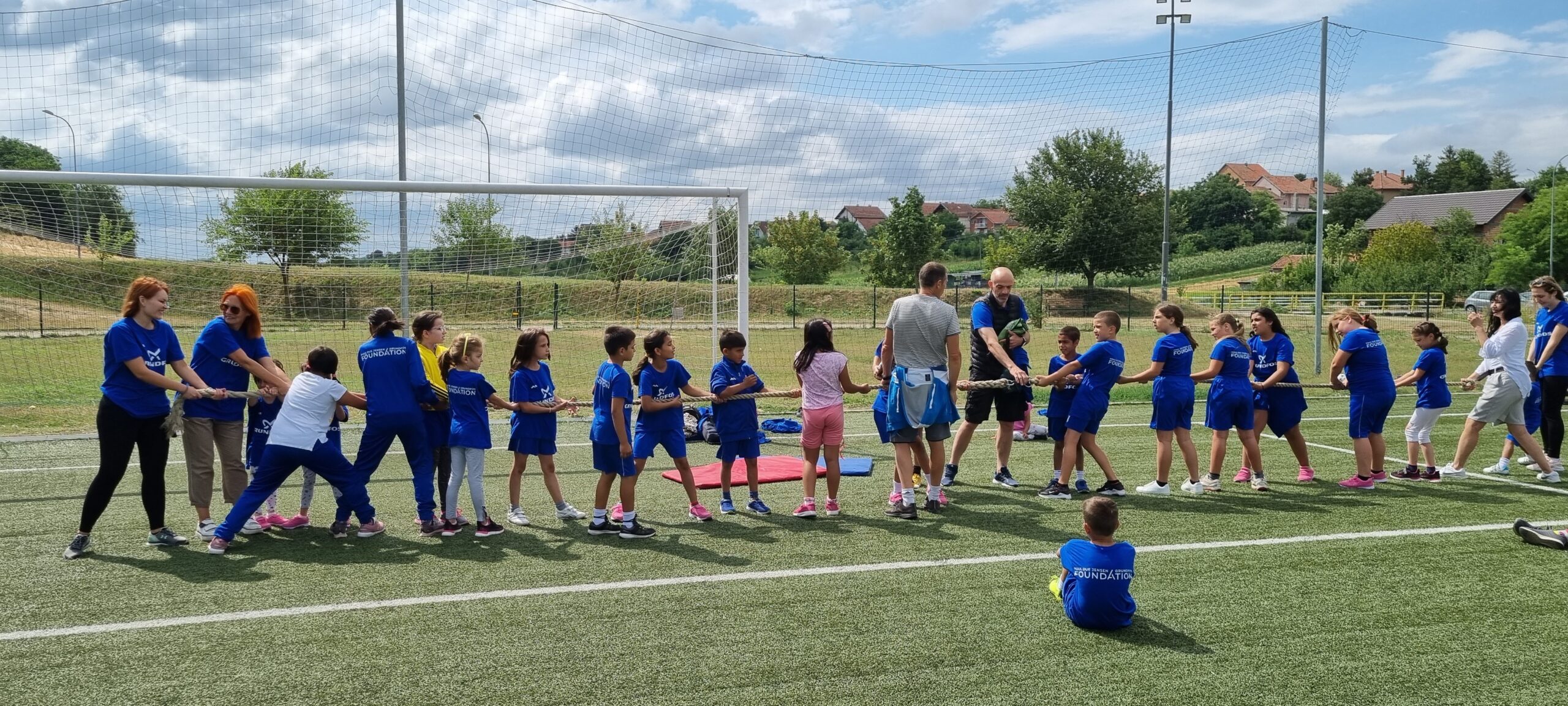
Serbia | Summer camp in Grundfos’ Serbian hometown, Indjija, for 80 Serbian children and vulnerable young people to participate in various sports activities, excursions, visits to cafés, cinemas, theatres, and restaurants, as well as several other forms of entertaining activities.
Summer camp activities, Serbia 2022. Photo: Miroslav Petrovic
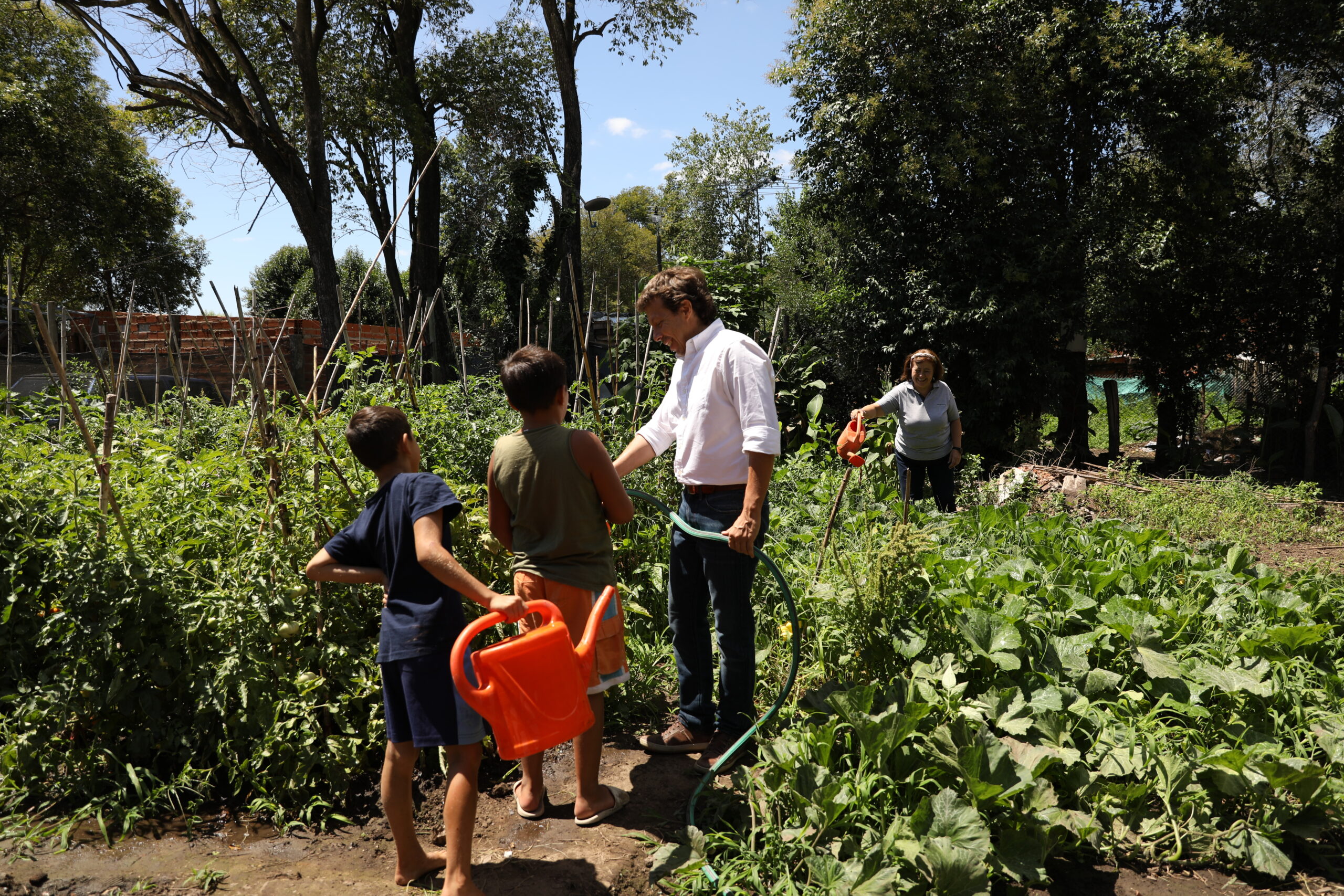
Argentina | In collaboration with Proyecto Agua Segura, brought water access and hygiene education to more than 15,000 people in Argentina.
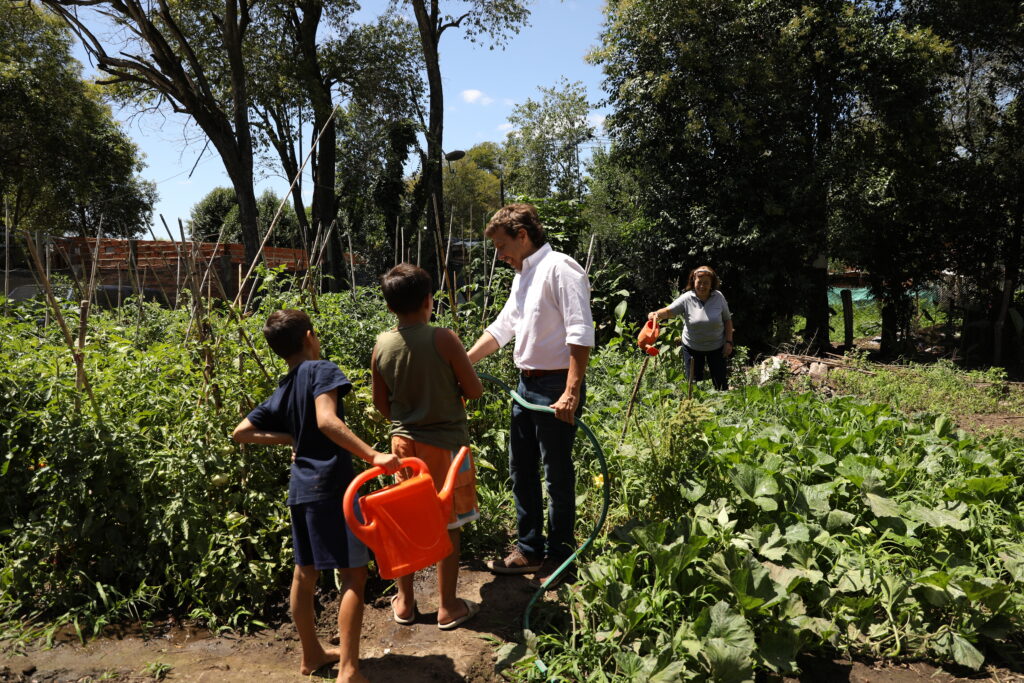
Argentina: Harvested rainwater is used to water gardens in the communities.
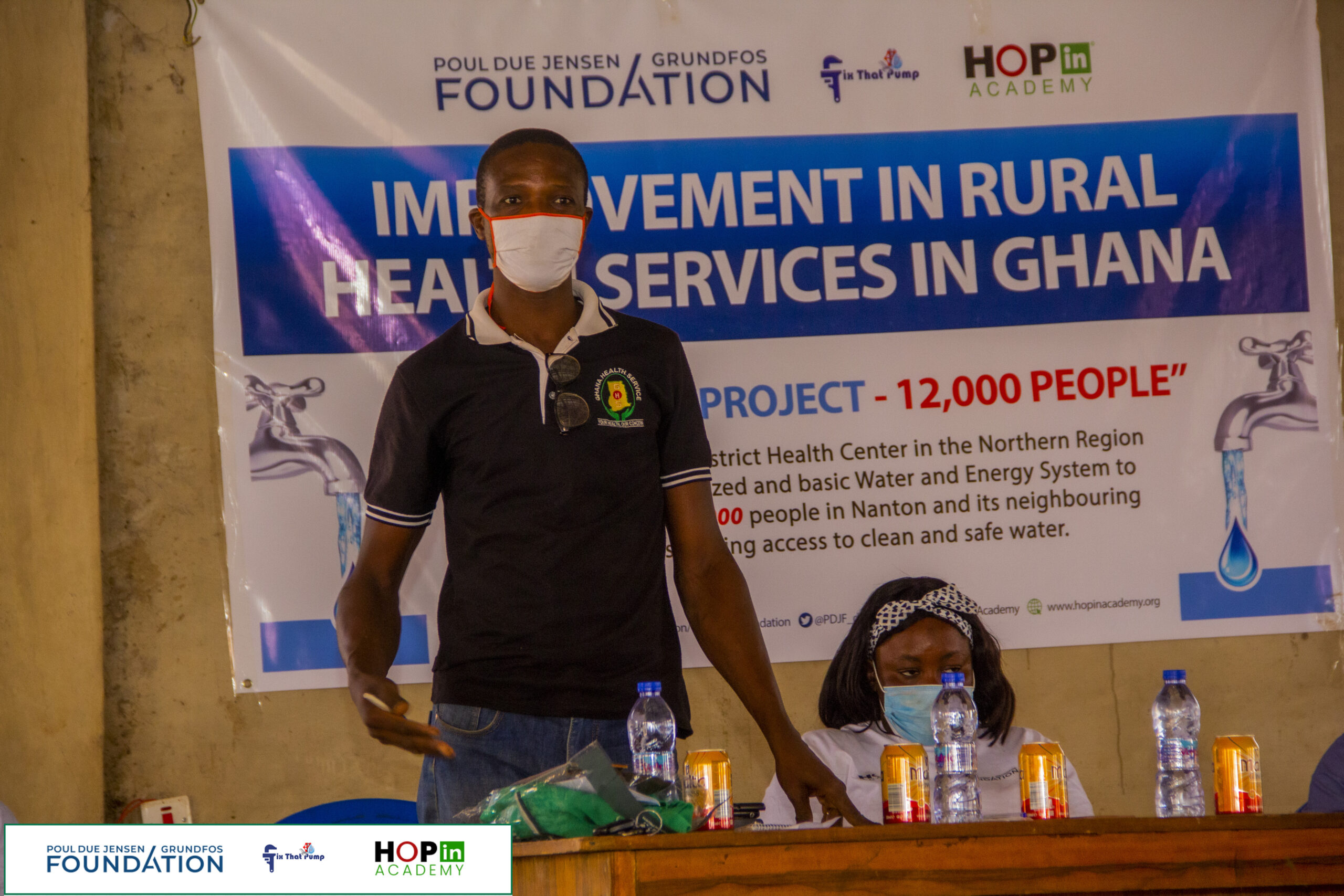
Ghana | In partnership with HOPin Academy, provided solar water pumping and electrification system to the Nanton District Health Facility through a new initiative.
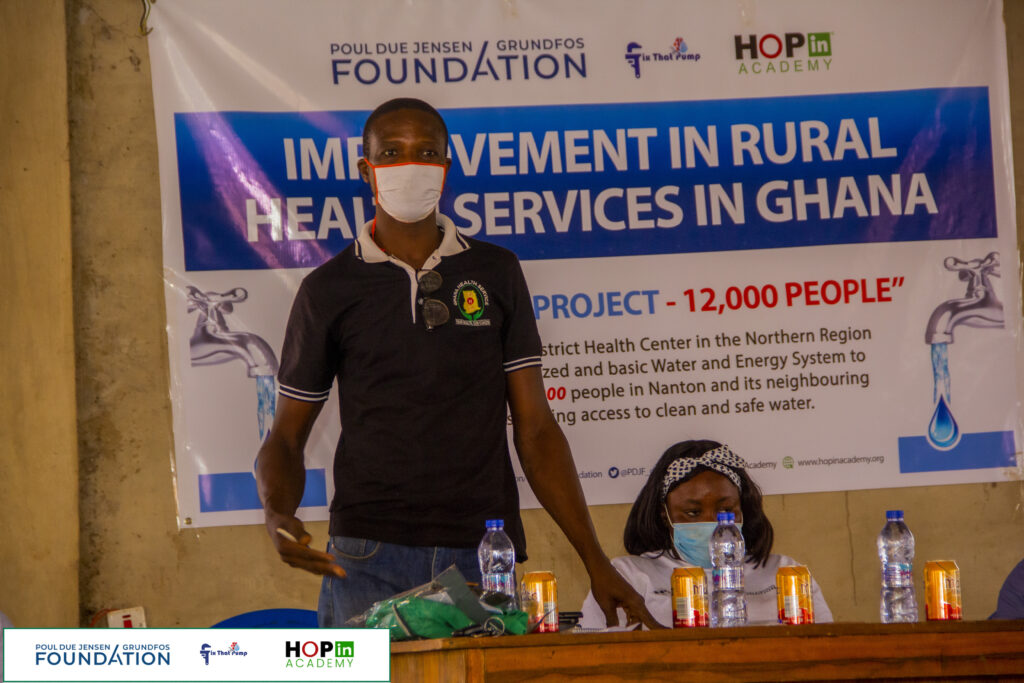
Stakeholder engagement meeting, Ghana. Photo: HOPin Academy